Managing employees effectively requires more than just maintaining records and processing salaries. Modern businesses need
 By Pay GURU
June 17, 2026
By Pay GURU
June 17, 2026
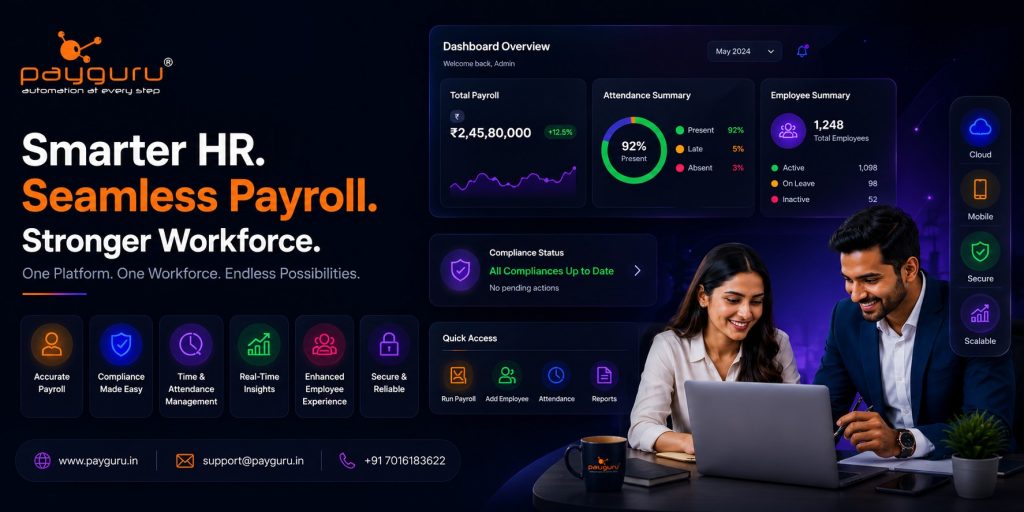
Managing employees effectively requires more than just maintaining records and processing salaries. Modern businesses need streamlined systems that can handle workforce management, attendance tracking, payroll processing, compliance, and employee engagement from a single platform. This is where integrated Human Resource Management Systems (HRMS) and payroll systems play a crucial role.
By combining HR and payroll functions into one unified solution, organizations can reduce administrative workload, improve accuracy, and create a more efficient employee management process. Whether a company has a small workforce or a large team spread across multiple locations, an integrated HRMS and payroll system helps simplify operations and support business growth.
An HRMS is designed to manage various human resource activities, including employee records, attendance, leave management, recruitment, performance tracking, and employee self-service functions.
Payroll software focuses on salary calculations, tax deductions, reimbursements, statutory compliance, and salary disbursement.
When these systems are integrated, employee information flows automatically between HR and payroll modules. This eliminates duplicate data entry and ensures that payroll calculations are based on real-time employee information.
In many organizations, HR and payroll are managed through separate systems or spreadsheets. This often leads to:
An integrated system removes these barriers by creating a single source of truth for employee data.
One of the most significant advantages of integration is improved data accuracy. Employee information such as attendance, leave records, salary revisions, bonuses, and deductions automatically updates across the system. Since information only needs to be entered once, the risk of duplicate or incorrect data is greatly reduced.
Accurate employee data helps ensure:
This minimizes payroll disputes and builds trust among employees.
Payroll processing can be time-consuming when HR and payroll functions operate separately. With an integrated solution:
As a result, payroll teams spend less time gathering information and more time reviewing payroll accuracy. Faster processing also ensures employees receive their salaries on time every month.
Manual HR and payroll management often require repetitive data entry across multiple systems. An integrated HRMS automates many routine tasks, including:
Automation allows HR professionals to focus on strategic activities such as employee development, workforce planning, and organizational growth rather than administrative tasks.
Labour laws, tax regulations, and statutory requirements continue to evolve. Businesses must remain compliant to avoid penalties and legal complications. Integrated HRMS and payroll systems help organizations manage compliance by:
Having compliance-related information in one system reduces the risk of missing critical deadlines or reporting obligations.
Integrated systems provide centralized access to employee data. HR teams, managers, and authorized personnel can quickly access information such as:
Real-time visibility improves decision-making and reduces the time spent searching for information across multiple platforms.
Employee satisfaction often depends on transparency and accessibility. Modern integrated HRMS platforms typically include employee self-service portals that allow employees to:
Providing employees with direct access to their information reduces HR queries and creates a more positive workplace experience.
Business leaders need accurate workforce data to make informed decisions. An integrated HRMS and payroll system can generate comprehensive reports covering:
These insights help organizations identify trends, control costs, and improve workforce planning.
Employee and payroll information contains sensitive data that must be protected. Integrated systems often include:
Having employee data stored within a centralized system improves security and reduces risks associated with multiple disconnected databases.
As businesses expand, managing employee information becomes increasingly complex. An integrated HRMS and payroll solution can scale with organizational growth by supporting:
This flexibility helps organizations avoid the need for frequent system replacements as they grow.
Integrated platforms consolidate HR and payroll information into a single database. Decision-makers gain access to meaningful workforce insights that support:
When accurate data is readily available, organizations can make more confident and informed business decisions.
When selecting an HRMS and payroll platform, organizations should consider features such as:
Selecting a solution with these capabilities can significantly improve operational efficiency and workforce management.
As organizations continue their digital transformation journey, integrated HRMS and payroll systems are becoming essential business tools rather than optional software solutions.
Businesses increasingly expect systems that provide automation, real-time insights, mobile accessibility, and seamless employee experiences. Integration helps organizations reduce complexity while creating a more agile and productive workforce environment.
Companies that invest in unified HR and payroll management can improve operational efficiency, support compliance, and make better workforce decisions in a competitive business landscape.
Integrated HRMS and payroll systems provide a smarter way to manage employee information, payroll processing, attendance, compliance, and reporting from a single platform. By eliminating manual processes and reducing data duplication, organizations can improve accuracy, save time, and enhance employee satisfaction.
Whether you are a growing business or an established enterprise, adopting an integrated HRMS and payroll solution can help streamline operations and support long-term success.
Looking to simplify HR and payroll management? Explore the advanced solutions offered by PayGURU HRMS Software and Payroll Software, discover how integrated workforce management can help your organization operate more efficiently.