Human Resources (HR) departments play a critical role in managing an organization’s workforce. From recruitment and onboarding

 By Pay GURU
June 19, 2026
By Pay GURU
June 19, 2026
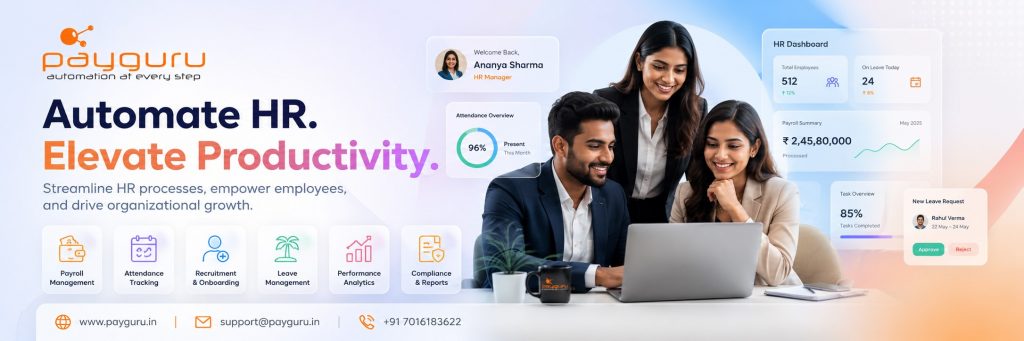
Human Resources (HR) departments play a critical role in managing an organization’s workforce. From recruitment and onboarding to payroll processing and attendance management, HR teams handle numerous responsibilities that directly impact business operations. However, many of these tasks are repetitive, time-consuming, and prone to manual errors.
As organizations grow, managing HR processes manually becomes increasingly difficult. This is where HR automation helps. By using technology to streamline routine tasks, businesses can improve efficiency, reduce administrative burdens, and allow HR professionals to focus on strategic initiatives that support organizational growth.
HR automation refers to the use of software and digital tools to perform HR-related tasks with minimal manual intervention. These systems automate repetitive processes, standardize workflows, and provide real-time access to employee information.
Modern HR automation solutions typically cover areas such as:
By integrating these functions into a centralized platform, organizations can improve operational efficiency while enhancing the employee experience.
HR productivity is not simply about completing more tasks in less time. It involves using resources effectively to support employees, improve workplace processes, and contribute to business objectives.
When HR teams spend a significant amount of time on administrative activities, they have less capacity to focus on:
Automation helps shift HR from a largely administrative function to a strategic business partner.
One of the biggest benefits of automation is the reduction of repetitive manual tasks.
Traditionally, HR professionals spend hours processing paperwork, updating employee records, tracking attendance, and managing leave requests. These activities are necessary but often consume valuable time.
Automated HR systems can:
This significantly reduces administrative workloads and allows HR teams to concentrate on higher-value responsibilities.
Payroll is one of the most critical HR functions. Even minor errors can affect employee satisfaction and create compliance challenges.
Manual payroll processing often involves:
HR automation simplifies these activities by integrating payroll with attendance and leave management systems.
Benefits include:
As a result, HR teams spend less time correcting mistakes and more time supporting employees.
Tracking employee attendance manually can become increasingly complex, especially for organizations with multiple departments, locations, or remote employees.
Automated attendance systems provide:
Employees can submit leave requests through self-service portals, while managers can approve requests with minimal effort.
This eliminates paperwork, improves transparency, and reduces the time HR teams spend managing attendance records.
Hiring the right talent is essential for business success, but recruitment can be resource-intensive.
HR automation helps streamline recruitment by:
Applicant tracking systems (ATS) can filter resumes based on predefined criteria, allowing recruiters to focus on the most qualified candidates.
This accelerates hiring processes and helps organizations fill positions more efficiently.
A smooth onboarding experience helps new employees become productive faster.
Manual onboarding often involves extensive paperwork, document collection, and repetitive communication.
Automated onboarding systems can:
This creates a consistent onboarding experience while reducing administrative effort.
Employee self-service portals are a key component of modern HR automation.
These portals allow employees to:
By giving employees direct access to HR services, organizations reduce dependency on HR staff for routine inquiries.
This not only improves efficiency but also enhances employee satisfaction.
HR automation systems generate valuable workforce data that can support strategic decision-making.
Organizations can gain insights into:
With access to accurate and timely information, HR leaders can make more informed decisions and identify opportunities for improvement.
Data-driven HR management contributes to better workforce planning and organizational growth.
Compliance requirements continue to evolve, making accurate recordkeeping essential.
Manual processes increase the risk of:
Automated HR systems help maintain compliance by:
This provides greater confidence during audits and regulatory reviews.
Human errors are common when handling large volumes of employee information manually.
Mistakes in payroll, attendance tracking, or employee records can lead to operational disruptions and employee dissatisfaction.
Automation improves accuracy by:
Greater accuracy leads to smoother HR operations and improved trust among employees.
As businesses continue to embrace digital transformation, HR automation will become increasingly important.
Modern HR technology enables organizations to:
Rather than replacing HR professionals, automation empowers them to focus on strategic activities that create long-term value for the organization.
HR automation is transforming the way organizations manage their workforce. By automating routine processes such as payroll, attendance tracking, recruitment, onboarding, and employee record management, businesses can significantly improve HR productivity.
The result is a more efficient HR function, fewer administrative burdens, improved accuracy, and better support for employees. As organizations seek greater efficiency and scalability, investing in HR automation solutions becomes an essential step toward building a more productive and future-ready workplace.
Ready to streamline your HR operations and improve workforce productivity?
Explore HR automation solutions from PayGURU and discover how technology can help simplify payroll, attendance, and employee management processes.