In today’s fast-moving business environment, managing employees manually is no longer practical. From attendance tracking and
 By Pay GURU
May 13, 2026
By Pay GURU
May 13, 2026
In today’s fast-moving business environment, managing employees manually is no longer practical. From attendance tracking and payroll processing to leave management and employee records, HR tasks can quickly become overwhelming. This is where HRMS software comes in.
An HRMS (Human Resource Management System) is a digital solution designed to automate and simplify HR operations. It helps businesses manage their workforce efficiently while saving time, reducing errors, and improving employee experience.
For companies of all sizes, HRMS software is no longer a luxury — it has become a necessity.
An HRMS is a centralized platform that combines multiple HR functions into one system. Instead of using spreadsheets, paperwork, and disconnected tools, businesses can manage everything from a single dashboard.
A modern HRMS typically includes:
With all HR data stored securely in one place, businesses can access information instantly and make better decisions.
Manual HR tasks consume a lot of time. Calculating salaries, tracking attendance, approving leaves, and generating reports can take hours every month.
HRMS software automates these repetitive processes, allowing HR teams to focus on more important tasks like employee engagement and business growth.
For example:
This significantly improves productivity.
Manual data entry often leads to mistakes in payroll, attendance, or employee records. Even small errors can create employee dissatisfaction and compliance issues.
HRMS software minimizes these risks by automating calculations and maintaining accurate records. This ensures:
Accuracy builds employee trust and improves operational efficiency.
Payroll is one of the most critical and sensitive business operations. Delayed or incorrect salary payments can negatively affect employee morale.
An HRMS with payroll integration makes payroll processing smooth and reliable by:
Integrated payroll systems also help businesses stay compliant with labor laws and regulations.
Modern employees expect transparency and convenience. HRMS software provides employee self-service features where employees can:
This reduces dependency on HR teams and creates a better employee experience.
Satisfied employees are more productive and engaged.
Tracking attendance manually becomes difficult as businesses grow, especially with hybrid and remote work models.
HRMS software helps businesses monitor:
Real-time tracking improves accountability and prevents attendance disputes.
Every business must comply with labor laws, tax regulations, and statutory requirements. Managing compliance manually increases the risk of penalties and legal issues.
HRMS software helps businesses stay compliant by:
This reduces administrative stress and legal risks.
As businesses expand, managing employees becomes more complex. An HRMS grows along with the organization and handles increasing HR demands without adding extra workload.
Whether a company has 10 employees or 10,000, HRMS software provides scalability and operational control.
It also helps management make data-driven decisions through detailed HR analytics and reports.
When choosing HRMS software, businesses should look for features such as:
A user-friendly interface and reliable customer support are also important.
The future of work is becoming more digital, flexible, and employee-focused. Businesses that still rely on manual HR processes may struggle with efficiency, compliance, and employee satisfaction.
HRMS software enables organizations to:
As technology continues to evolve, HRMS platforms are also integrating AI, automation, and advanced analytics to improve HR operations even further.
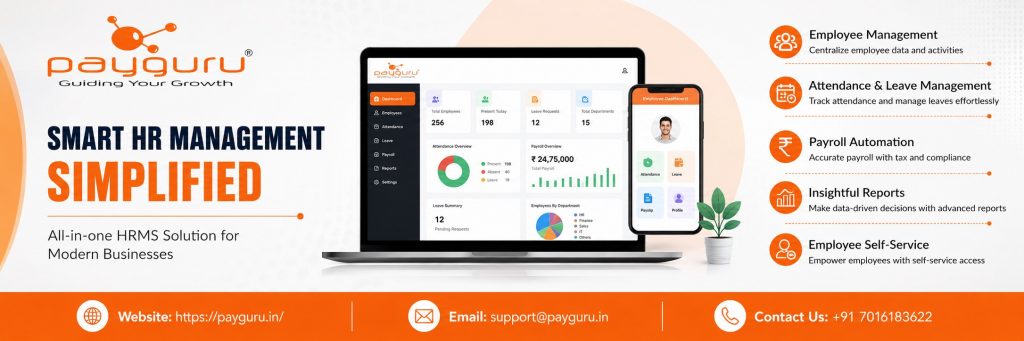
If you are looking for a reliable and efficient HRMS solution, PayGURU offers a powerful platform designed to simplify HR and payroll operations for businesses of all sizes.
With advanced features like payroll automation, attendance management, leave tracking, employee self-service, and compliance support, PayGURU HRMS helps businesses save time, reduce errors, and improve workforce productivity.